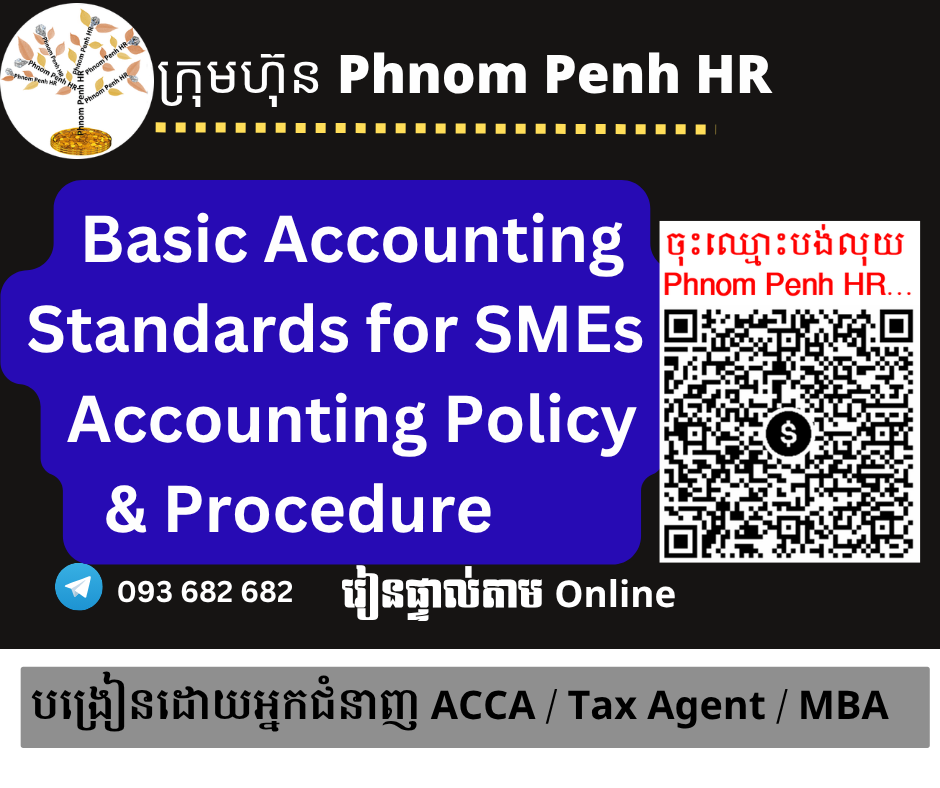
រៀនផ្ទាល់តាម Online ៖ Important Accounting Standards for SMEs , Accounting Policy & Procedure (ស្តង់ដារគណនេយ្យមូលដ្ឋានសម្រាប់សហគ្រាសធុនតូចនិងមធ្យម រួមទាំង គោលនយោបាយគណនេយ្យ និង នីតិវិធី ) 👉 រៀនតែ ១ ថ្ងៃ វគ្គថ្មីចូលរៀនថ្ងៃពុធទី 07/10/2026 ពីម៉ោង 8 AM to 12 PM និង 1:30 PM to 5:30 PM
Original price was: $199.$99Current price is: $99.
វគ្គនេះបណ្តុះបណ្តាលដោយផ្ទាល់ពី លោក យ៉ាន់ ណាង (Yan Nang) ជាអ្នកមានបទពិសោធន៍ការងារជាង ១៥ ឆ្នាំនិងបានបញ្ចប់ ACCA (អ្នកដែលអាចប្រលងជាប់ ៤ មុខវិជ្ជាក្នុងពេលតែម្តងលំដាប់ផុតលេខ), MBA/BBA (សិស្សពូកែ) ,Tax Agent (លំដាប់ពិន្ទុខ្ពស់)
ក្រុមហ៊ុន Phnom Penh HR នឹងធ្វើការបណ្តុះបណ្តាលទាក់ទងនឹង Important Accounting Standard for SMEs , Accounting Policy & Procedure ទាំងទ្រឹស្តីនិងការអនុវត្តជាក់ស្តែងតាមរយៈ Online ចំនុចសំខាន់ដែលត្រូវសិក្សារួមមាន៖
I. Statement of Financial Position (Section 4- របាយការណ៍ស្ថានភាពហិរញ្ញវត្ថុ)
- Present statement of financial position at a specific date
- Content and format for statement of financial position
- Shows:
- Assets
- Liabilities
- Equity
- Based on the accounting equation: Assets=Liabilities + Equity
- Assets and liabilities are classified into:
- Current
- Non-current
- Helps users assess liquidity, solvency, and financial stability
II. Statement of Comprehensive Income and Income Statement (Section 5- របាយការណ៍ចំណូលពេញលេញ និង របាយការណ៍លទ្ធផល)
- Presents financial performance for a reporting period
- Content and format for Statement of Comprehensive Income and Income Statement
- Income Statement shows profit or loss
- Statement of Comprehensive Income includes:
- Profit or loss
- Other comprehensive income (OCI)
- Main components include:
- Revenue
- Cost of sales
- Gross profit
- Operating expenses
- Finance costs
- Tax expense
- Profit after tax
- Helps evaluate profitability and operating performance
III. Statement of Changes in Equity and Statement of Income and Retained Earnings (Section 6- របាយការណ៍បម្រែបម្រួលមូលធន និង របាយការណ៍ចំណូលនិងចំណេញរក្សាទុក)
- Shows changes in owners’ equity during the period
- Content and format for Statement of Changes in Equity and Statement of Income and Retained Earnings
- Includes changes from:
- Profit or loss
- Dividends
- Share issues
- Reserves
- Retained earnings increase from profits and decrease from dividends
- SMEs may present a Statement of Income and Retained Earnings instead of a full Statement of Changes in Equity when changes are limited
IV. Statement of Cash Flows ( Section 7- របាយការណ៍លំហូរសាច់ប្រាក់ )
- Reports cash inflows and outflows during the period
- Content and format for Statement of Cash Flows
- Divided into:
- Operating activities
- Investing activities
- Financing activities
- Helps assess liquidity and cash management
- Can be prepared using:
- Direct method
- Indirect method
V. Notes to the Financial Statements ( Section 8- កំណត់សម្គាល់លើរបាយការណ៍ហិរញ្ញវត្ថុ)
- Provide additional explanations and details supporting the financial statements
- Include:
- Accounting policies
- Breakdown of balances
- Judgments and estimates
- Risks and commitments
- Essential for understanding the financial statements properly
VI. Accounting Policies, Estimates and Errors (Section 10- គោលនយោបាយគណនេយ្យ ការប៉ាន់ស្មាន និង កំហុសឆ្គង)
- Accounting policies are the principles and methods used in preparing financial statements
- Accounting estimates involve judgments, such as:
- Useful life of assets
- Allowance for doubtful debts
- Errors may result from omissions or mistakes
- Changes in accounting policies are usually applied retrospectively
- Changes in estimates are applied prospectively
- Material prior-period errors must be corrected retrospectively
VII. Inventories (Section 13- សន្និធិ)
- Inventories include:
- Raw materials
- Work in progress
- Finished goods
- Inventories Measured at the lower of cost and net realizable value (NRV)
- Cost of Inventory
- Cost formulas allowed:
- FIFO
- Weighted average
- LIFO is not permitted under IFRS for SMEs
VIII. Property, Plant and Equipment / PPE (Section 17-ទ្រព្យ រោងចក្រ និង បរិក្ខារ)
- Tangible assets used in business operations for more than one period
- Examples:
- Land
- Buildings
- Machinery
- Vehicles
- Initially measured at cost
- Cost of PPE
- Subsequently measured using:
- Cost model
- Revaluation model (if permitted)
- Depreciation is recognized over the useful life of the asset
IX. Intangible Assets Other Than Goodwill (Section 18-ទ្រព្យសកម្មអរូបីដែលមិនមែនជាកេរ្តិ៍ឈ្មោះអាជីវកម្ម)
- Non-physical identifiable assets
- Cost of Intangible Assets
- Examples:
- Software
- Licenses
- Patents
- Copyrights
- Recognized when future economic benefits are probable
- Measured initially at cost
- Amortized over useful life
- Research costs are normally expensed immediately
X. Revenue from Contracts with Customers (Section 23-ចំណូលពីកិច្ចសន្យាជាមួយអតិថិជន)
- Revenue is recognized when control of goods or services transfers to customers
- Main steps include:
- Identify the contract
- Identify performance obligations
- Determine transaction price
- Allocate transaction price
- Recognize revenue
- Revenue may be recognized:
- Over time
- At a point in time
XI. Income Tax (Section 29-ពន្ធលើប្រាក់ចំណូល)
- Includes:
- Current tax
- Deferred tax
- Current tax is based on taxable profit for the current period
- Deferred tax arises from temporary differences
- Tax expense is recognized in profit or loss unless related to equity or OCI
XII. Events After the End of the Reporting Period (Section 32-ព្រឹត្តិការណ៍ក្រោយចុងការិយបរិច្ឆេទរាយការណ៍)
- Events occurring between the reporting date and the authorization date of financial statements
- Two types:
- Adjusting events
- Non-adjusting events
- Adjusting events require changes to financial statements
- Non-adjusting events require disclosure if material
XIII. Accounting Policy for Expenses (គោលនយោបាយគណនេយ្យសម្រាប់ចំណាយ)
- Expenses are recognized using the accrual basis
- Recognized when incurred, not when paid
- Expenses must be supported by proper documentation
- Common expense categories include:
- Administrative expenses
- Selling expenses
- Finance costs
- Matching principle should be applied
XIV. Accounting Policy for Income (គោលនយោបាយគណនេយ្យសម្រាប់ចំណូល)
- Income is recognized when earned
- Revenue measured at fair value of consideration received
- Discounts and returns are deducted from revenue
- Interest income recognized using time proportion basis
- Income should be recognized consistently and reliably
XV. Accounting Policy for Fixed Assets (គោលនយោបាយគណនេយ្យសម្រាប់ទ្រព្យសកម្មរយៈពេលវែង)
- Fixed assets are initially recorded at cost
- Depreciation is calculated systematically over useful life
- Useful life and residual value should be reviewed regularly
- Ordinary repairs are expensed
- Major improvements may be capitalized
- Gains or losses on disposal recognized in profit or loss
XVI. Accounting Policy for Inventory (គោលនយោបាយគណនេយ្យសម្រាប់សន្និធិ)
- Inventory measured at lower of cost and NRV
- Cost includes:
- Purchase cost
- Conversion cost
- Other related costs
- FIFO and weighted average commonly used
- Obsolete or damaged inventory may require write-down
- Physical inventory counts should be performed regularly
XVII. Accounting Policy for Liability (គោលនយោបាយគណនេយ្យសម្រាប់បំណុល)
- Liabilities recognized when a present obligation exists
- Classified into:
- Current liabilities
- Non-current liabilities
- Loans usually measured at amortized cost
- Provisions recognized when obligations are probable and measurable
- Contingent liabilities disclosed in notes if material
XVIII. Examples and Questions
Note:
- We retain the right to add or remove insignificant parts of the training content above, provided such changes do not affect the overall learning outcomes.
- After finishing your training, if you wish to receive an e-Certificate, please read the eligibility criteria via this link: https://phnompenhhr.com/certificate/
Original price was: $199.$99Current price is: $99.ចុច ចុះឈ្មោះរៀន
វគ្គសិក្សានិងសេវាកម្មផ្សេងទៀត
-

រៀនផ្ទាល់តាម Online ៖ Accounting for Living Animals (គណនេយ្យសម្រាប់វិស័យកសិកម្មទាក់ទងនឹងការការចិញ្ចឹមសត្វ ) 👉 រៀនពេលល្ងាច រៀន ២ថ្ងៃគឺថ្ងៃពុធនិងព្រហស្បតិ៍ពីម៉ោង 6 PM ដល់ 9 PM វគ្គថ្មីចូលរៀនទី 16/09/2026
Original price was: $120.$99Current price is: $99. ចុច ចុះឈ្មោះរៀន -

រៀនផ្ទាល់តាម Online ៖ Master Budget & Planning for Financial Statements (របៀបរៀបចំគម្រោងព្យាករណ៏ផែនការថវិកាមេ សម្រាប់របាយការណ៍ហិរញ្ញវត្ថុ ) 👉 រៀនពេលល្ងាច រៀន ២ថ្ងៃគឺថ្ងៃពុធនិងព្រហស្បតិ៍ពីម៉ោង 6 PM ដល់ 9 PM វគ្គថ្មីចូលរៀនទី 14/10/2026
Original price was: $120.$99Current price is: $99. ចុច ចុះឈ្មោះរៀន -

រៀនផ្ទាល់តាម Online ៖ Accounting for Hotel/ Guesthouse (គណនេយ្យសម្រាប់សណ្ឋាគារឬផ្ទះសំណាក់) 👉 រៀនតែ ១ ថ្ងៃ វគ្គថ្មីចូលរៀនថ្ងៃអង្គារទី 13/10/2026 ពីម៉ោង 8 AM to 12 PM និង 1:30 PM to 5:30 PM
Original price was: $120.$99Current price is: $99. ចុច ចុះឈ្មោះរៀន -

រៀនផ្ទាល់តាម Online ៖ Accounting for Merchandising, Import and Export Company (គណនេយ្យសម្រាប់ក្រុមហ៊ុនទិញលក់ទំនិញ និងក្រុមហ៊ុននាំចេញនាំចូល ) 👉 រៀនតែ ១ ថ្ងៃ វគ្គថ្មីចូលរៀនថ្ងៃព្រហស្បតិ៍ទី 10/09/2026 ពីម៉ោង 8 AM to 12 PM និង 1:30 PM to 5:30 PM
Original price was: $120.$99Current price is: $99. ចុច ចុះឈ្មោះរៀន -

រៀនផ្ទាល់តាម Online ៖ Internal Audit and Internal Control System (សវនកម្មផ្ទៃក្នុងនិងប្រព័ន្ធត្រួតពិនិត្យផ្ទៃក្នុង) 👉 រៀនតែ ១ ថ្ងៃ វគ្គថ្មីចូលរៀនថ្ងៃច័ន្ទទី 28/04/2026 ពីម៉ោង 8 AM to 12 PM និង 1:30 PM to 5:30 PM (Copy)
Original price was: $160.$99Current price is: $99. ចុច ចុះឈ្មោះរៀន -

រៀនផ្ទាល់តាម Online ៖ ការកត់ត្រានិងបិទបញ្ជីគណនេយ្យដោយប្រើកម្មវិធី QuickBooks 👉 រៀនពេលល្ងាច រៀន ២ថ្ងៃគឺថ្ងៃសុក្រនិងសៅរ៍ពីម៉ោង 6 PM ដល់ 9 PM វគ្គថ្មីចូលរៀនទី 30/10/2026
Original price was: $199.$103Current price is: $103. ចុច ចុះឈ្មោះរៀន -

រៀនផ្ទាល់តាម Online ៖ Accounting for Not-For-Profit Entities / NFPEs (គណនេយ្យសម្រាប់ អង្គភាពមិនស្វែងរកប្រាក់ចំណេញ ) 👉 រៀនពេលល្ងាច រៀន ២ថ្ងៃគឺថ្ងៃចន្ទ័និងអង្គារពីម៉ោង 6 PM ដល់ 9 PM វគ្គថ្មីចូលរៀនទី 04/05/2026 (Copy)
Original price was: $120.$99Current price is: $99. ចុច ចុះឈ្មោះរៀន -

រៀនផ្ទាល់តាម Online ៖ Basic Accounting and Bookkeeping (គណនេយ្យសម្រាប់អ្នកមិនទាន់ចេះចាប់ផ្តើមពីការកត់ត្រាដំបូងរហូតដល់បិទបញ្ជីគណនេយ្យ ) 👉 រៀនតែ ១ ថ្ងៃ វគ្គថ្មីចូលរៀនថ្ងៃពុធទី 16/09/2026 ពីម៉ោង 8 AM to 12 PM និង 1:30 PM to 5:30 PM
Original price was: $120.$99Current price is: $99. ចុច ចុះឈ្មោះរៀន -

រៀនផ្ទាល់តាម Online ៖ Consolidated Financial Statements and Statement of Cash Flow (ការរៀបចំរបាយការណ៍ហិរញ្ញវត្ថុរួមនិងរបាយការណ៍លំហូរសាច់ប្រាក់រួម)👉 រៀនតែ ១ ថ្ងៃ វគ្គថ្មីចូលរៀនថ្ងៃសុក្រទី 18/09/2026 ពីម៉ោង 8 AM to 12 PM និង 1:30 PM to 5:30 PM
Original price was: $120.$99Current price is: $99. ចុច ចុះឈ្មោះរៀន -
រៀនផ្ទាល់តាម Online ៖ Basic Accounting Standards for SMEs , Accounting Policy & Procedure (ស្តង់ដារគណនេយ្យមូលដ្ឋានសម្រាប់សហគ្រាសធុនតូចនិងមធ្យម រួមទាំង គោលនយោបាយគណនេយ្យ និង នីតិវិធី ) 👉 រៀនតែ ១ ថ្ងៃ វគ្គថ្មីចូលរៀនថ្ងៃពុធទី 25/04/2026 ពីម៉ោង 8 AM to 12 PM និង 1:30 PM to 5:30 PM (Copy)
Original price was: $199.$99Current price is: $99. ចុច ចុះឈ្មោះរៀន -

រៀនផ្ទាល់តាម Online ៖ Accounting for Service Company (គណនេយ្យក្រុមហ៊ុនដែលបំពេញសេវាកម្មរយៈពេលខ្លីនិងវែង ) 👉រៀនតែ ១ ថ្ងៃ វគ្គថ្មីចូលរៀនថ្ងៃអង្គារទី 06/10/2026 ពីម៉ោង 8 AM to 12 PM និង 1:30 PM to 5:30 PM
Original price was: $120.$99Current price is: $99. ចុច ចុះឈ្មោះរៀន -

រៀនផ្ទាល់តាម Online ៖ Accounting for Café (គណនេយ្យសម្រាប់ហាងកាហ្វេ ) 👉 រៀនតែ ១ ថ្ងៃ វគ្គថ្មីចូលរៀនថ្ងៃអង្គារទី 14/4/2026 ពីម៉ោង 8 AM to 12 PM និង 1:30 PM to 5:30 PM (Copy)
Original price was: $120.$99Current price is: $99. ចុច ចុះឈ្មោះរៀន -
រៀនផ្ទាល់តាម Online ៖ Master Budget & Planning for Financial Statements (របៀបរៀបចំគម្រោងព្យាករណ៏ផែនការថវិកាមេ សម្រាប់របាយការណ៍ហិរញ្ញវត្ថុ ) 👉 រៀនតែ ១ ថ្ងៃ វគ្គថ្មីចូលរៀនថ្ងៃសៅរ៍ទី 25/4/2026 ពីម៉ោង 8 AM to 12 PM និង 1:30 PM to 5:30 PM (Copy)
Original price was: $120.$99Current price is: $99. ចុច ចុះឈ្មោះរៀន -

រៀនផ្ទាល់តាម Online ៖ Business Strategy (យុទ្ធសាស្ត្រអាជីវកម្ម) 👉 រៀនតែ ១ ថ្ងៃ វគ្គថ្មីចូលរៀនថ្ងៃអង្គារទី 15/09/2026 ពីម៉ោង 8 AM to 12 PM និង 1:30 PM to 5:30 PM
Original price was: $198.$99Current price is: $99. ចុច ចុះឈ្មោះរៀន -

រៀនផ្ទាល់តាម Online ៖ Accounting for Manufacturing Company (គណនេយ្យសម្រាប់ក្រុមហ៊ុនផលិតកម្ម) 👉 រៀនតែ ១ ថ្ងៃ វគ្គថ្មីចូលរៀនថ្ងៃសៅរ៍ទី 18/4/2026 ពីម៉ោង 8 AM to 12 PM និង 1:30 PM to 5:30 PM (Copy)
Original price was: $120.$99Current price is: $99. ចុច ចុះឈ្មោះរៀន -

រៀនផ្ទាល់តាម Online ៖ Accounting for Restaurant (គណនេយ្យសម្រាប់ភោជនីយដ្ឋាន)👉 រៀនតែ ១ ថ្ងៃ វគ្គថ្មីចូលរៀនថ្ងៃព្រហស្បតិ៍ទី 9/4/2026 ពីម៉ោង 8 AM to 12 PM និង 1:30 PM to 5:30 PM (Copy)
Original price was: $120.$99Current price is: $99. ចុច ចុះឈ្មោះរៀន -
រៀនផ្ទាល់តាម Online ៖ Basic Accounting and Bookkeeping (គណនេយ្យសម្រាប់អ្នកមិនទាន់ចេះចាប់ផ្តើមពីការកត់ត្រាដំបូងរហូតដល់បិទបញ្ជីគណនេយ្យ ) 👉 រៀនតែ ១ ថ្ងៃ វគ្គថ្មីចូលរៀនថ្ងៃអង្គារទី 21/4/2026 ពីម៉ោង 8 AM to 12 PM និង 1:30 PM to 5:30 PM (Copy)
Original price was: $120.$99Current price is: $99. ចុច ចុះឈ្មោះរៀន -
រៀនផ្ទាល់តាម Online ៖ Internal Audit and Internal Control System (សវនកម្មផ្ទៃក្នុងនិងប្រព័ន្ធត្រួតពិនិត្យផ្ទៃក្នុង) 👉 រៀនតែ ១ ថ្ងៃ វគ្គថ្មីចូលរៀនថ្ងៃច័ន្ទទី 28/09/2026 ពីម៉ោង 8 AM to 12 PM និង 1:30 PM to 5:30 PM
Original price was: $160.$99Current price is: $99. ចុច ចុះឈ្មោះរៀន -

រៀនផ្ទាល់តាម Online ៖ Accounting for Leasing Company and Investment Property (គណនេយ្យសម្រាប់អាជីវកម្មជួលទ្រព្យផ្សេងៗនិងភតិសន្យា ) 👉 រៀនតែ ១ ថ្ងៃ វគ្គថ្មីចូលរៀនថ្ងៃចន្ទ័ទី 05/10/2026 ពីម៉ោង 8 AM to 12 PM និង 1:30 PM to 5:30 PM
Original price was: $120.$99Current price is: $99. ចុច ចុះឈ្មោះរៀន -

រៀនផ្ទាល់តាម Online ៖ Monthly Tax (ពន្ធប្រចាំខែ ) 👉រៀនតែ ១ ថ្ងៃ វគ្គថ្មីចូលរៀនថ្ងៃពុធទី 23/09/2026 ពីម៉ោង 8 AM to 12 PM និង 1:30 PM to 5:30 PM
Original price was: $199.$99Current price is: $99. ចុច ចុះឈ្មោះរៀន -
រៀនផ្ទាល់តាម Online ៖ Accounting for Not-For-Profit Entities / NFPEs (គណនេយ្យសម្រាប់ អង្គភាពមិនស្វែងរកប្រាក់ចំណេញ )👉 រៀនតែ ១ ថ្ងៃ វគ្គថ្មីចូលរៀនថ្ងៃព្រហស្បតិ៍ទី 01/10/2026 ពីម៉ោង 8 AM to 12 PM និង 1:30 PM to 5:30 PM
Original price was: $120.$99Current price is: $99. ចុច ចុះឈ្មោះរៀន -
រៀនផ្ទាល់តាម Online ៖ Accounting for Service Company (គណនេយ្យក្រុមហ៊ុនដែលបំពេញសេវាកម្មរយៈពេលខ្លីនិងវែង ) 👉 រៀនពេលល្ងាច រៀន ២ថ្ងៃគឺថ្ងៃសុក្រនិងសៅរ៍ពីម៉ោង 6 PM ដល់ 9 PM វគ្គថ្មីចូលរៀនទី 01/05/2026 (Copy)
Original price was: $120.$99Current price is: $99. ចុច ចុះឈ្មោះរៀន -

រៀនផ្ទាល់តាម Online ៖ Accounting for Agricultural Living Plants and Bearer Plants (គណនេយ្យសម្រាប់វិស័យកសិកម្មទាក់ទងនឹង ដំណាំនិងការដាំដុះផ្សេងៗ) 👉 រៀនពេលល្ងាច រៀន ២ថ្ងៃគឺថ្ងៃពុធនិងព្រហស្បតិ៍ពីម៉ោង 6 PM ដល់ 9 PM វគ្គថ្មីចូលរៀនទី 07/10/2026
Original price was: $120.$99Current price is: $99. ចុច ចុះឈ្មោះរៀន -

រៀនផ្ទាល់តាម Online៖ Financial Management Expert / CFO ( វគ្គសិក្សា អ្នកជំនាញគ្រប់គ្រងហិរញ្ញវត្ថុ ) រៀនរាល់ថ្ងៃអាទិត្យពីម៉ោង 3:30 PM ដល់ 5:30 PM រយៈពេល 66 ម៉ោង | ចុះឈ្មោះភ្លាម ចូលរៀនភ្លាម
$189 ចុច ចុះឈ្មោះរៀន -
រៀនផ្ទាល់តាម Online ៖ Accounting for Café (គណនេយ្យសម្រាប់ហាងកាហ្វេ ) 👉 រៀនតែ ១ ថ្ងៃ វគ្គថ្មីចូលរៀនថ្ងៃពុធទី 14/10/2026 ពីម៉ោង 8 AM to 12 PM និង 1:30 PM to 5:30 PM
Original price was: $120.$99Current price is: $99. ចុច ចុះឈ្មោះរៀន -
រៀនផ្ទាល់តាម Online ៖ Consolidated Financial Statements and Statement of Cash Flow (ការរៀបចំរបាយការណ៍ហិរញ្ញវត្ថុរួមនិងរបាយការណ៍លំហូរសាច់ប្រាក់រួម)👉 វគ្គថ្មីចូលរៀនថ្ងៃទី 23/8/2026 រៀនរាល់ថ្ងៃអាទិត្យពីម៉ោង 1 PM to 3 PM រៀនចំនួន 5 អាទិត្យ ( 10 ម៉ោង)
Original price was: $120.$99Current price is: $99. ចុច ចុះឈ្មោះរៀន -
រៀនផ្ទាល់តាម Online ៖ Monthly Tax (ពន្ធប្រចាំខែ ) 👉 រៀនពេលល្ងាច រៀន ២ថ្ងៃគឺថ្ងៃសុក្រនិងសៅរ៍ពីម៉ោង 6 PM ដល់ 9 PM វគ្គថ្មីចូលរៀនទី 11/09/2026
Original price was: $199.$99Current price is: $99. ចុច ចុះឈ្មោះរៀន -
រៀនផ្ទាល់តាម Online ៖ Accounting for Restaurant (គណនេយ្យសម្រាប់ភោជនីយដ្ឋាន)👉 រៀនតែ ១ ថ្ងៃ វគ្គថ្មីចូលរៀនថ្ងៃច័ន្ទទី 14/09/2026 ពីម៉ោង 8 AM to 12 PM និង 1:30 PM to 5:30 PM
Original price was: $120.$99Current price is: $99. ចុច ចុះឈ្មោះរៀន -

រៀនផ្ទាល់តាម Online ៖ Construction Accounting & Real Estate Developer (គណនេយ្យសម្រាប់ក្រុមហ៊ុនសាងសង់ និង អ្នកអភិវឌ្ឍន៍អចលនទ្រព្យ ) 👉 រៀនតែ ១ ថ្ងៃ វគ្គថ្មីចូលរៀនថ្ងៃព្រហស្បតិ៍ទី 17/09/2026 ពីម៉ោង 8 AM to 12 PM និង 1:30 PM to 5:30 PM
Original price was: $119.$99Current price is: $99. ចុច ចុះឈ្មោះរៀន -

រៀនផ្ទាល់តាម Online ៖ Financial Analysis (ការវិភាគរបាយការណ៍ហិរញ្ញវត្ថុ ) 👉រៀនតែ ១ ថ្ងៃ វគ្គថ្មីចូលរៀនថ្ងៃសៅរ៍ ទី 21/3/2026 ពីម៉ោង 8 AM to 12 PM និង 1:30 PM to 5:30 PM (Copy)
Original price was: $120.$99Current price is: $99. ចុច ចុះឈ្មោះរៀន -

រៀនផ្ទាល់តាម Online ៖ Costing & Pricing (ការកំណត់ ថ្លៃដើម និង ថ្លៃលក់ចេញ) 👉រៀនតែ ១ ថ្ងៃ វគ្គថ្មីចូលរៀនថ្ងៃសុក្រទី 02/10/2026 ពីម៉ោង 8 AM to 12 PM និង 1:30 PM to 5:30 PM
Original price was: $119.$99Current price is: $99. ចុច ចុះឈ្មោះរៀន -

រៀនផ្ទាល់តាម Online ៖ Fundamental Financial Management (មូលដ្ឋាននៃការគ្រប់គ្រងហិរញ្ញវត្ថុ ) 👉 រៀនពេលល្ងាច រៀន ២ថ្ងៃគឺថ្ងៃសុក្រនិងសៅរ៍ពីម៉ោង 6 PM ដល់ 9 PM វគ្គថ្មីចូលរៀនទី 16/10/2026
Original price was: $199.$118Current price is: $118. ចុច ចុះឈ្មោះរៀន -

រៀនផ្ទាល់តាម Online ៖ Tax on Income / TOI (អនុវត្ត ពន្ធលើប្រាក់ចំណូល ) 👉 រៀនតែ ១ ថ្ងៃ វគ្គថ្មីចូលរៀនថ្ងៃព្រហស្បតិ៍ទី 24/09/2026 ពីម៉ោង 8 AM to 12 PM និង 1:30 PM to 5:30 PM
Original price was: $150.$99Current price is: $99. ចុច ចុះឈ្មោះរៀន -
រៀនផ្ទាល់តាម Online ៖ Internal Audit and Internal Control System (សវនកម្មផ្ទៃក្នុងនិងប្រព័ន្ធត្រួតពិនិត្យផ្ទៃក្នុង) 👉 រៀនពេលល្ងាច រៀន ២ថ្ងៃគឺថ្ងៃសុក្រនិងសៅរ៍ពីម៉ោង 6 PM ដល់ 9 PM វគ្គថ្មីចូលរៀនទី 09/10/2026
Original price was: $160.$99Current price is: $99. ចុច ចុះឈ្មោះរៀន -
រៀនផ្ទាល់តាម Online ៖ Accounting for Leasing Company and Investment Property (គណនេយ្យសម្រាប់អាជីវកម្មជួលទ្រព្យផ្សេងៗនិងភតិសន្យា ) 👉 រៀនតែ ១ ថ្ងៃ វគ្គថ្មីចូលរៀនថ្ងៃចន្ទ័ទី 04/05/2026 ពីម៉ោង 8 AM to 12 PM និង 1:30 PM to 5:30 PM (Copy)
Original price was: $120.$99Current price is: $99. ចុច ចុះឈ្មោះរៀន -
រៀនផ្ទាល់តាម Online ៖ Accounting for Living Animals (គណនេយ្យសម្រាប់វិស័យកសិកម្មទាក់ទងនឹងការការចិញ្ចឹមសត្វ ) 👉 រៀនពេលល្ងាច រៀន ២ថ្ងៃគឺថ្ងៃពុធនិងព្រហស្បតិ៍ពីម៉ោង 6 PM ដល់ 9 PM វគ្គថ្មីចូលរៀនទី 06/05/2026 (Copy)
Original price was: $120.$99Current price is: $99. ចុច ចុះឈ្មោះរៀន